


Hidden Objects - The Journey
4.53.26K Reviews
App Specs
- Version
- 1.1.36
- Updated On
- License
- Free
- Downloads
- 10,000,000+
- Developer
- SayGames Ltd
- Categories
- Puzzle
- Platform
- Android, iOS
Screenshots
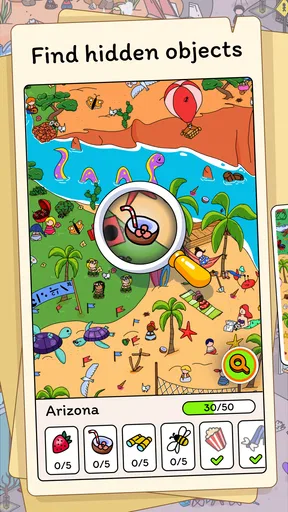
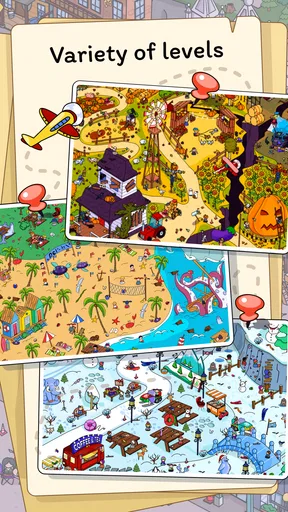
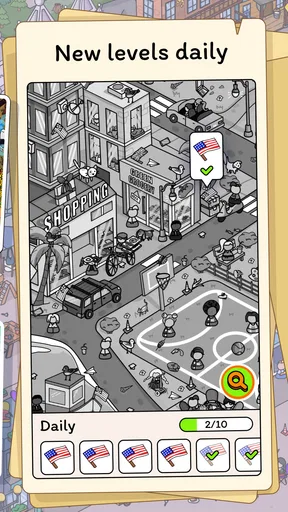
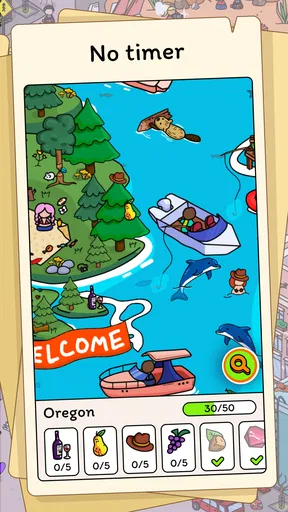
 Analysis by AppCompare
Hidden Objects - The Journey is the kind of puzzle game I can open without preparing myself for a long session. I look at a scene, settle into its visual details, and start searching for items that are easy to overlook. That simple loop makes a strong first impression because it is immediately understandable, yet it still gives my attention something meaningful to do.
Developed by SayGames Ltd, this free puzzle game is aimed at players who enjoy observation more than speed or complicated controls. Its central idea is to inspect illustrated pictures and locate concealed objects, but the experience depends on how well each scene guides my eyes. When the artwork is arranged thoughtfully, finding one item often reveals a useful way to read the rest of the image.
The game is available for Everyone and runs on devices using Android 8.0 or later. It has reached over 10 million installs and holds a 4.5 average from around 215 thousand ratings, which suggests that its straightforward format has found a broad audience. I can see why: it works as a short break, a quiet concentration exercise, or a casual game to return to when I do not want a demanding challenge.
How the visual journey establishes its mood
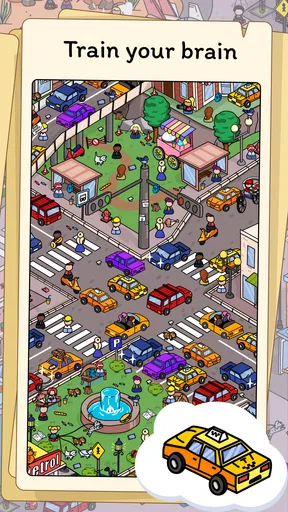
My first useful tip is to resist tapping randomly as soon as a picture appears. I get better results by dividing the scene into zones: foreground, middle distance, corners, and areas with repeated textures. This is especially helpful when several objects share colors with their surroundings. The game rewards careful looking, so treating the image like a visual map is more effective than scanning it in a frantic circle.
The setting matters because hidden-object puzzles can easily become a stack of unrelated illustrations. Here, the journey framing gives the search a sense of movement from one picture to the next. I am not simply checking a list against a blank background; I am exploring composed scenes whose objects belong to a recognizable place or moment. That context makes the task feel less mechanical, even when the basic action remains the same.
The art direction also affects difficulty. A bright object placed against a quiet background is usually a quick win, while an item tucked into a cluster of similar shapes asks for patience. I appreciate that contrast because it creates a natural rhythm inside each puzzle. Some discoveries feel immediate, while others come from noticing an odd edge, an unusual color break, or a shape that does not quite fit the surrounding decoration.
One practical way to play is to begin with distinctive silhouettes rather than tiny details. I look first for objects with recognizable outlines, then return to patterned surfaces and crowded sections. This approach prevents me from spending too much time on the hardest corner before I have collected the easier discoveries. It also makes the search feel progressive instead of overwhelming.
Worth Reading Before You Choose

EA SPORTS FC Mobile 26 Is a Bigger Football Game, but It Takes Time

Flipboard Shows What News Apps Must Do Beyond the Feed

Switching to Android Auto Means Rethinking Your Driving Routine

Google Calendar Makes a Crowded Week Easier to Manage

Ludo King Makes the Most of the Minutes Between Plans

Baby Panda World Brings Quick Play to Modern Phones, but Its Game Library Feels Busy
Players who enjoy visual illustration will probably get more from the game than players who only want a fast score. The pictures are not merely containers for targets; they are the main reason the puzzles have personality. I find myself pausing to understand the scene before searching, and that pause is important. It turns the artwork into part of the play rather than something I ignore while chasing icons.
Reading the scenes instead of fighting them
The strongest moments come when the game encourages a change in perspective. If I have searched every obvious shelf, path, or open area, I stop asking where an object “should” be and start looking for visual interruptions. A small shape may be hidden beside a similar one, or an item may be positioned where my eyes naturally skim past it. This is a useful skill beyond the game because it trains deliberate observation rather than passive viewing.
That design also creates a fair trade-off. The more detailed a picture becomes, the richer its atmosphere can feel, but the more likely I am to miss an item because the scene is visually busy. I enjoy that tension in moderation. It gives the puzzle texture, although anyone who prefers clean, minimal layouts may find some searches slower than expected.
I would not describe this as a game built around narrative surprises. Its journey is expressed mainly through changing visual situations and the feeling of moving through a collection of places. If you need dialogue, character development, or a strong plot to maintain interest, this will probably feel too quiet. I recommend it for the act of looking, not for story progression in the usual adventure-game sense.
Sound, silence, and the pace of a search
The audio presentation works best when I treat it as support rather than the main attraction. A hidden-object game needs room for concentration, and an aggressive soundtrack would compete with the very activity the game is asking me to perform. The overall mood is more comfortable when the sound lets the artwork and my own attention take the lead.
This makes the game suitable for everyday situations where I want something calm. I can imagine opening it while waiting for an appointment, taking a short break from work, or winding down before bed. In those moments, the lack of pressure is a genuine advantage. I am not required to learn a complex control scheme, and I can focus on one visual problem at a time.
There is a trade-off here for players who need constant stimulation. The measured pace may feel repetitive if I play for too long without a break. My advice is to use the natural stopping points instead of forcing a marathon session. After several searches, my eyes become less reliable, and I start overlooking obvious shapes. Walking away briefly is not just healthier; it often makes the next round feel easier.
Sound can also influence how I approach the puzzles. When I am playing in a noisy environment, I pay more attention to the visual structure and less to the surrounding mood. With headphones or a quiet room, the scenes feel more cohesive. I would not choose this game for its audio alone, but the restrained presentation fits its observation-based identity.
Why the mechanics match the artwork
The core mechanic is easy to understand: inspect a picture and find hidden objects. That simplicity is a strength because the game does not place a barrier between me and the visual challenge. I can hand it to someone who rarely plays mobile games and explain the goal almost immediately. The real learning curve is not controls; it is learning how to search intelligently.
One of the most useful habits is to create a consistent scanning pattern. I move from left to right, then check the upper and lower edges before revisiting the center. Without a pattern, I tend to circle the same familiar area and ignore the margins. This method is particularly valuable when the target list includes objects that blend with scenery rather than standing in open space.
Another good tactic is to compare the target’s expected form with the scene’s visual language. If the picture uses many rounded shapes, I look for a straight edge or a break in the repeated curves. If the colors are muted, I search for a slightly different tone rather than waiting for a bright object to announce itself. These small adjustments make the puzzles feel more analytical and reduce the temptation to tap everywhere.
The game is a good fit for people who like gentle mental exercise, but it is not the best choice for someone seeking elaborate puzzle systems. There are no complicated combinations or deep strategic layers at the center of the experience. Its satisfaction comes from recognition: my eye catches something my brain initially filtered out, and the scene suddenly makes more sense.
That focus gives it a clear advantage over many fast casual alternatives. Instead of reacting to falling pieces, matching symbols under a timer, or repeating a short arcade action, I am allowed to slow down and inspect. On the other hand, a match-three game may be better when I want immediate feedback and a more energetic flow. A traditional logic puzzle may suit me more when I want deduction, numbers, or rules that can be reasoned through without relying so heavily on visual detail.
Where the free model affects the experience
The game is free to download, with in-app purchases ranging from $0.99 to $99.99 per item. That range is worth keeping in mind before I commit to extended play. A free entry point makes it easy to try the visual style and decide whether the search loop suits me, but optional purchases can matter to players who want to move through the experience without friction.
My recommendation is to treat the free version as a trial of the core activity rather than assuming every player will have the same uninterrupted experience. If I enjoy the scenes and do not mind the pacing, the basic format can be enough for casual sessions. If I dislike waiting, repeated prompts, or the possibility of spending to smooth progress, I would be more comfortable with a paid puzzle game that offers a clearer one-time purchase model.
This is also where the game’s audience splits. A parent looking for a gentle visual activity for an older child may appreciate the Everyone rating and the simple objective, while still wanting to supervise purchases on a shared device. An adult player who wants a quiet distraction can simply use it in short bursts. Someone searching for a completely purchase-free experience should compare the payment model before making it a regular habit.
Who will enjoy the journey most
I would recommend Hidden Objects - The Journey to players who like illustrated scenes, patient searching, and puzzles that can be understood in seconds. It is especially well suited to people who enjoy noticing small details in pictures or who want a game that does not demand constant reflexes. The accessible age rating also makes its basic concept easy to share across a household.
It is a practical choice for a short daily routine. For example, after finishing lunch, I can spend a few minutes searching one scene instead of opening a social feed and losing track of time. The game gives that break a clear beginning and end: I look, identify, and move on. That structure is more satisfying than aimless scrolling, provided I am in the mood for calm concentration.
I would skip it if my ideal puzzle game must have a strong story, competitive leaderboards, complex deduction, or a steady stream of dramatic rewards. I would also choose another option when my eyes are tired or when I am playing on a small screen with a lot of glare. Detailed hidden-object scenes demand comfortable viewing conditions, and no amount of enthusiasm makes tiny visual differences easy to spot in poor light.
Players who struggle with visual clutter should try a few searches before deciding. The same density that makes a scene atmospheric can make it frustrating. My approach is to lower the surrounding distractions, hold the device at a comfortable distance, and take a short pause when I begin tapping from impatience. Those adjustments improve the experience more than simply staring harder.
Version, access, and long-term appeal
The current version is 1.1.36, and the game supports Android from version 8.0 onward. That makes the technical entry point fairly approachable for many Android users, although the actual comfort of play still depends on screen size and how clearly the illustrations display. I would check those basics before installing on an older phone, especially if detailed images are difficult to view elsewhere.
Its broad install base and strong average rating show that the format has lasting casual appeal, but popularity does not remove the personal question: do I enjoy searching the same kind of visual space repeatedly? For me, the answer depends on mood. When I want a peaceful activity, the game feels inviting. When I want novelty through rules or story, I reach for another puzzle category.
The developer’s choice to keep the central interaction so direct is sensible. I do not have to memorize instructions, and my progress depends mostly on attention. The downside is that the experience can feel narrow if I expect major mechanical evolution. Its success rests on the quality and variety of the scenes, the fairness of object placement, and the pacing between searches rather than on a large collection of systems.
My atmosphere verdict
After spending time with Hidden Objects - The Journey, I see it as a focused mood game disguised as a simple search puzzle. The artwork establishes the setting, the sound stays out of the way, and the measured rhythm gives each picture room to breathe. Those elements work because the mechanics are modest enough to let observation remain the star.
I like that the game rewards a slower kind of attention. My best sessions come when I scan methodically, use the scene’s patterns as clues, and stop before fatigue turns the search into random tapping. That is also the main limitation: the experience asks for patience, and players who want constant action may not find enough momentum here.
The right way to enjoy this game is to treat each picture as a small place to explore, not as a checklist to rush through. With that mindset, the visual direction and gentle pacing support the mechanics rather than distracting from them. I recommend giving it a try if you want a free, accessible puzzle for quiet moments, while keeping your expectations realistic about its purchase options and deliberately narrow focus.
For me, it earns its place among casual hidden-object games because it understands that atmosphere can make a familiar mechanic feel personal. It is not the choice I would make for deep logic or high-energy competition, but it is a pleasant companion when I want to slow down, look carefully, and let a small visual journey occupy my attention.
Pros
- Relaxing hidden-object gameplay suitable for short sessions.
- Varied scenes keep the search challenges from feeling repetitive.
- Helpful hints make difficult objects easier to find.
- Simple controls are comfortable on both phones and tablets.
- Good option for casual players who enjoy visual puzzles.
Cons
- Some objects blend into the scenery and can feel unfair to spot.
- Hint availability may encourage waiting or watching ads.
- Later levels can become repetitive for dedicated players.
- Small details may be difficult to see on compact screens.
- Progress can feel slow without spending extra time in the app.
FAQs for Hidden Objects - The Journey
What is Hidden Objects - The Journey about?
Hidden Objects - The Journey is a casual puzzle game built around finding carefully concealed items in illustrated scenes. Each level presents a new location or situation to explore, and your objective is to identify the requested objects before completing the scene. It is designed for players who enjoy observation, relaxing gameplay, and short challenges rather than fast action or complex controls.
Is Hidden Objects - The Journey suitable for beginners and children?
The game is generally easy to start because it relies on tapping objects rather than complicated controls. However, some scenes can contain small, partially hidden, or similarly colored items that may challenge younger players. Parents should review the app’s age rating, advertising, and in-app purchase settings before allowing children to play, especially if the device is shared or linked to a payment method.
Does Hidden Objects - The Journey require an internet connection?
The basic hidden-object gameplay may work without a constant internet connection, which is convenient for playing during travel or in areas with limited coverage. Nevertheless, certain features—such as advertisements, optional rewards, updates, cloud-related functions, or newly downloaded content—may require access to the internet. Availability can also vary between Android and iOS versions, so checking the store listing is recommended.
Are there hints or assistance when an object is difficult to find?
Most hidden-object games include some form of assistance, and Hidden Objects - The Journey is intended to remain approachable when a scene becomes difficult. Hints may help reveal or indicate the location of a requested item, although they can be limited, earned through gameplay, or connected to optional rewards. Using hints carefully is useful because searching independently is the main challenge and enjoyment of each level.
Is Hidden Objects - The Journey free to download, and does it include purchases?
The game can typically be downloaded at no initial cost, but free access may be supported by advertisements, optional purchases, or both. Depending on the version, players may be offered extra hints, bonus resources, or other conveniences through in-app transactions. Before downloading, review the current Google Play or App Store listing and configure purchase restrictions if children use the device.


